What a dish description has to do
A menu description has three jobs, and it has to do them in the time a hungry guest spends glancing at a line of text. It must tell guests what the dish actually is, help them imagine eating it, and give them the facts they need to choose safely. Everything else, from clever wordplay to a story about the chef’s grandmother, is optional and earns its place only if it supports those three jobs.
Good descriptions also help the business. A guest who understands a dish is more likely to try something new, which matters when you want to move a high-margin plate that rarely gets ordered. Clear descriptions reduce questions at the table, so servers spend less time explaining what a beurre blanc or a kosha is and more time looking after the room. They also cut down on returned plates from guests who expected something different.
The best descriptions read as if a knowledgeable server were leaning in to tell you about the dish: confident, specific and brief. They avoid hype, because guests have learned to tune it out, and they avoid jargon that makes people feel they need a dictionary to order dinner. When a technical term is the right word, such as confit or tadka, the rest of the line should make its meaning clear enough that nobody feels foolish asking.
A simple structure for every description
Most strong descriptions follow the same order, whether the dish is a dosa, a burger or a plated dessert. Start with the hero ingredient, the thing the guest is really choosing. Add how it is cooked, because technique signals texture and effort. Then name one or two supporting flavors and, finally, what it is served with. That sequence matches how people think about food: what is it, how is it done, what does it taste like, what else is on the plate.
You do not need every element every time. A simple dish can stand on two elements, such as charred corn on the cob with lime and chili butter. A complex dish might need all four. The structure is a checklist for clarity, not a template that forces every line to the same length. Read the finished line aloud; if a server would trip over it, cut it down.
- Name the hero ingredient precisely: lamb shoulder rather than lamb, burrata rather than cheese.
- Add one technique that changes texture or flavor, such as slow-braised, wood-fired, tandoor-roasted or cured.
- Add one or two supporting flavors the guest will genuinely notice, not every ingredient in the recipe.
- Finish with the accompaniment or base, such as on saffron rice, with warm flatbread or over smoked aubergine.
- Add any required allergen or dietary marker in the menu’s standard format.
- Read it aloud and remove any word that does not help a guest choose.
Use technique and sensory words that mean something
The most persuasive words on a menu are concrete. Technique words and sensory words help guests build a picture of the dish before it arrives, and a clear picture is what makes someone order. Vague praise asks the guest to trust you; specific detail lets them decide for themselves. Compare the words tasty chicken with chicken thigh grilled over charcoal, glazed with tamarind and jaggery, and notice which one you can almost smell.
Choose words your kitchen can deliver. If the menu says crisp, the dish must be crisp when it reaches the table, not after the plate has waited three minutes under a heat lamp. Every descriptive word is a small promise, and a guest who finds a soggy crust under the word crisp trusts the rest of your menu a little less.
Technique tells guests what the kitchen did
Words such as braised, confit, smoked, charred, fermented, cured, tempered, dum-cooked and hand-rolled signal both flavor and effort. They help justify a price, because guests understand that an eight-hour braise or a dough rested overnight takes time. Use the technique that defines the dish, not every step: a short rib braised for eight hours does not also need to tell guests it was seared, deglazed and strained.
Texture and temperature help guests imagine the bite
Texture words such as crisp, silky, flaky, tender, creamy and crunchy are among the most useful on any menu, because texture is hard to guess from a name alone. Temperature contrasts are worth mentioning too: warm chocolate fondant with cold cardamom ice cream tells guests exactly what experience to expect. Use flavor words sparingly and precisely, such as smoky, tangy, peppery or bright, rather than a string of adjectives.
Name sources honestly
Naming a farm, a region or a producer can make a dish more appealing and tells guests you care about ingredients. Coorg pepper, Kashmiri chili, Gruyère, San Marzano tomatoes, Atlantic cod or day-boat scallops all add meaning when they are true. The rule is simple: only make a sourcing claim you can stand behind every service, including the night the usual delivery fails and the kitchen buys elsewhere.
Be especially careful with words that carry legal or ethical weight, such as organic, free-range, wild-caught, grass-fed, local and protected regional names. Many of these are regulated or certified in some markets, and guests rightly feel deceived when they are not accurate. If a supplier changes, update the menu the same day. If you cannot guarantee a source, describe the ingredient by quality and technique instead of by origin.
Honest sourcing also means not overselling the ordinary. Calling a supermarket brioche bun artisan, or a commercial sauce house-made, is the kind of claim staff know is false, and it erodes their confidence when guests ask questions. It is better to be proud of what you genuinely make in-house, such as the stock, the pickles or the ice cream, and to describe bought-in components plainly. Guests rarely mind a good bought bun; they mind being told a story that is not true.
How long should a menu description be
For most dishes, 10 to 25 words is enough. That gives you room for the hero ingredient, a technique, a supporting flavor and the accompaniment without forcing guests to read a paragraph for every choice. Bestsellers and simple classics can be shorter, because guests already know what a margherita or a masala dosa is. Unfamiliar dishes, signature plates and items you want to promote can carry a little more detail.
Length should also match the format. A printed fine-dining menu with eight dishes can afford slightly longer lines than a cafe board with forty items. On a phone, long descriptions push the next dish off the screen and make scrolling feel endless, so keep digital descriptions tight and let a photo carry some of the work where you have one.
Consistency matters as much as the word count itself. If most dishes have one line and a few have four, the long ones look like advertisements and the short ones look neglected. Aim for a similar rhythm within each category, giving extra words only to the dishes that genuinely need explaining. A quick way to check is to print the category, hold it at arm’s length and look at the shape of the text before reading a single word.
Retire the clichés
Menu clichés are words that sound like praise but tell guests nothing. Delicious, mouthwatering, scrumptious, world-famous, to die for and cooked to perfection all fall into this category. Every restaurant uses them, so they carry no information, and some guests read them as a sign that the kitchen has nothing specific to say. Replace each one with a detail the guest can picture.
Some words are not clichés so much as unexplained claims. Homemade, fresh, authentic and secret recipe are only meaningful when the guest can see what they refer to. Instead of fresh fish, say which fish and how it is cooked. Instead of authentic Chettinad chicken, mention the black pepper, the roasted spices and the curry leaves that make it Chettinad.
- Delicious or tasty: describe the flavor itself, such as smoky, tangy, peppery or rich with brown butter.
- Cooked to perfection: name the doneness or technique, such as seared medium-rare or slow-roasted until it pulls apart.
- Fresh: say what makes it fresh, such as caught this morning, picked this week or made to order.
- Homemade: be specific, such as hand-rolled pasta, house-fermented hot sauce or bread baked each morning.
- Authentic: point to the defining ingredients or method instead of claiming authenticity.
- Famous or legendary: let the dish’s position, a photo and your servers’ recommendations do that work.
Add allergen and dietary notes guests can trust
Allergen and dietary information is not decoration; for some guests it is the most important text on the menu. Many jurisdictions require businesses to provide information about specific major allergens, though the list and the rules on how to present it differ by country. In India, menus commonly carry vegetarian and non-vegetarian marks. Whatever the local rules, the information must be accurate, consistent and confirmed by the kitchen before it goes on the menu.
Use a single, consistent system across the whole menu, such as short letter codes or simple symbols with a clear key. Place markers in the same position on every dish so guests can scan for them quickly. Mention allergens that guests might not expect, such as cashew paste in a korma, fish sauce in a salad dressing or almond flour in a gluten-free cake. A dish marked vegetarian must not contain hidden meat stock or gelatin.
Train staff that menu markers are a starting point, not the full answer. Recipes change, suppliers substitute products and cross-contact can happen in a busy kitchen. Servers should know where the allergen matrix is kept and should ask the kitchen when a guest has a serious allergy, rather than guessing from memory. Include allergen questions in new-starter training and in pre-service briefings whenever a dish changes, so the menu, the matrix and the team all say the same thing.
Before and after: rewriting common descriptions
Rewriting is easier with examples. The pairs below show typical menu lines and stronger versions built with the structure above. None of the rewrites are long; they simply replace vague words with specific ones and put the information in the order guests use it. Use them as patterns for your own dishes, swapping in your real ingredients, techniques and accompaniments.
Notice what the rewrites leave out. They do not list every spice in the masala, every herb in the salsa verde or every component of the dessert. They pick the details that change what the guest expects to taste and feel, and they trust the dish to deliver the rest. Leaving room for discovery is part of what makes a meal enjoyable.
| Before | After | What changed |
|---|---|---|
| Delicious chicken curry, cooked to perfection | Chicken thigh in a slow-cooked tomato, cashew and fenugreek gravy, with steamed basmati | Hero cut, technique, key flavors and accompaniment replace empty praise |
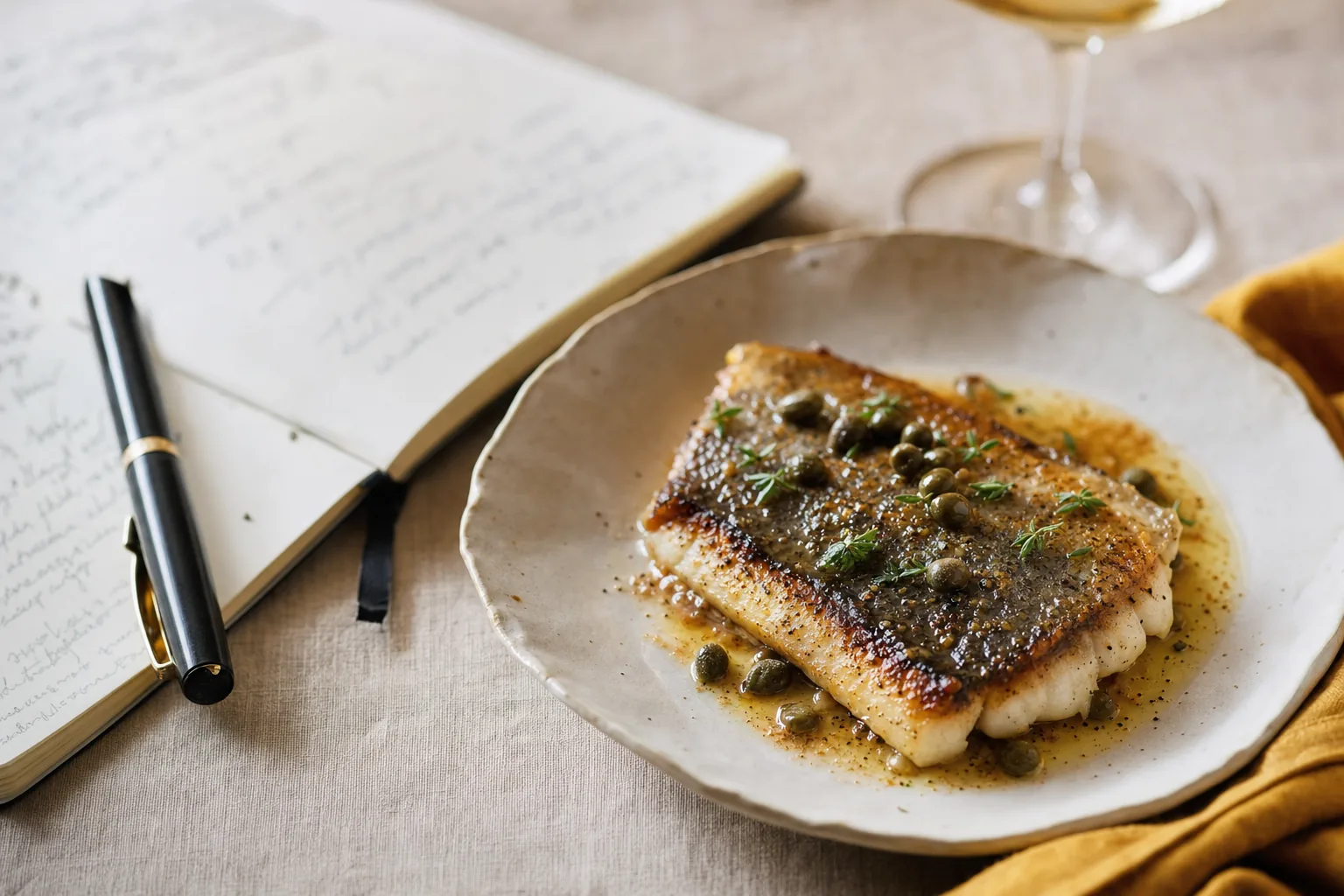
| Fresh fish of the day | Line-caught sea bream, pan-roasted with lemon, capers and brown butter | Species, catch method and technique show what fresh means |
| Our famous burger | Dry-aged beef patty, aged cheddar, pickled onions and smoked mayo on a toasted brioche bun | Specific components replace an unexplained claim |
| Homemade chocolate cake | Warm dark chocolate fondant, molten center, with cold cardamom ice cream | Texture and temperature contrast replace a vague word |
| Authentic masala dosa | Crisp rice and lentil crepe filled with spiced potato, with coconut chutney and sambar | Defining ingredients explain the dish to newcomers |
Every descriptive word is a small promise, and a guest who finds a soggy crust under the word crisp trusts the rest of your menu a little less.
Keep the tone consistent across the menu
A menu should sound like one restaurant, not like several writers who never met. Decide on a voice that fits your concept, whether that is warm and casual for a neighborhood cafe, precise and restrained for a tasting menu, or playful for a cocktail bar, and apply it everywhere. The same voice should carry through dish names, descriptions, category headings and small notes about service charges or allergens.
Write a one-page style guide and keep it with the recipe files. It saves time whenever a new dish is added and stops small inconsistencies creeping in, such as one dish listing its sides in a separate sentence while another runs them into the main line. If several people edit the menu, the guide matters even more. Include a short list of approved words for your cuisine, the cliché list you have banned and two or three model descriptions that show the voice at its best.
Digital menus make it easy to keep descriptions current. In Menulo, owners and managers can edit a dish description and save it, and the published menu shows the change after the guest refreshes the page, so there is no reason to leave an outdated line in place while you wait for a reprint. Treat each new or changed description as a small edit for the style guide to check: does it follow the structure, avoid the banned words and match its neighbors in length?
- Decide whether dish names use title case or sentence case, and stick to it.
- Pick one way to list accompaniments, such as always ending with the word with.
- Agree on spelling for regional dishes and ingredients, such as biryani, paneer or gochujang, and use it everywhere.
- Use the same allergen and dietary markers in the same position on every dish.
- Set a target length for each category and flag outliers during reviews.
- Ban the cliché list in writing so every new description is checked against it.
Frequently asked questions
How many words should a menu description be?
Most dish descriptions work best at 10 to 25 words. That is enough for the main ingredient, a cooking technique, one or two supporting flavors and the accompaniment. Classic dishes guests already know can be shorter, while unfamiliar or signature dishes may need a few more words. On a phone, shorter descriptions keep the menu easier to scroll and compare.
What words should you avoid on a menu?
Avoid empty praise such as delicious, mouthwatering, scrumptious, world-famous and cooked to perfection, because they give guests no information. Be careful with claims such as fresh, homemade, authentic, organic and local unless you can explain or prove them. Replace each vague word with a specific technique, texture, ingredient or origin the guest can picture.
Should menu descriptions list every ingredient?
No. List the ingredients that define the dish and change what a guest expects to taste, such as the hero protein, a key sauce or a distinctive spice. Long ingredient lists are hard to read and make dishes sound complicated. Allergens are the exception: provide complete allergen information in the format your local food authority requires, either on the menu or through staff and a clear notice.
How do you describe a dish that guests do not know?
Anchor it to something familiar and explain the defining parts. Describe the main ingredient, the cooking method and the texture, such as a crisp rice and lentil crepe filled with spiced potato for a masala dosa. Avoid explaining the history at length. Brief your servers to describe the dish in the same words so the menu and the table conversation match.
Can descriptions help sell high-margin dishes?
Yes. A clear, appealing description is one of the simplest ways to encourage guests to try a dish they might otherwise skip. Rewrite descriptions for profitable but underordered dishes first, using concrete technique and sensory detail, then compare their sales over the following weeks using your POS or sales records. Change one thing at a time so you know what worked.
- #menudescriptions
- #menuwriting
- #dishdescriptions
- #menucopywriting
- #allergennotes